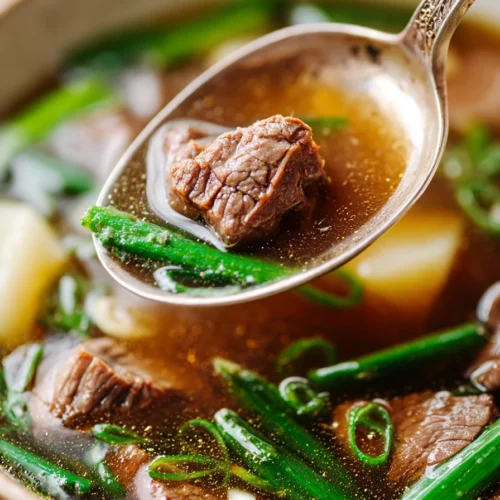
Korean Winter Soup
Warm up your coldest days with this hearty Korean Winter Soup. Packed with layers of flavor from gochujang, gochugaru, and doenjang, along with fresh vegetables and your choice of protein, this soup is cozy, nutritious, and deeply satisfying. Perfect for winter evenings, weeknight dinners, or meal prep.
Ingredients
- Essential Pantry Ingredients
- 1 tablespoon sesame oil
- 2 tablespoons soy sauce
- 1 tablespoon gochujang Korean chili paste
- 1 teaspoon gochugaru Korean chili flakes
- 1 tablespoon doenjang fermented soybean paste
- Protein Options
- 200 g thinly sliced beef chicken, or tofu
- Vegetables
- 1 cup napa cabbage chopped
- ½ cup carrots sliced
- ½ cup mushrooms sliced
- 1 potato diced
- 3 green onions chopped
- 2 cloves garlic minced
- 1- inch piece ginger minced
- Optional Add-Ons
- Glass noodles
- Kimchi
- Soft-boiled egg
Instructions
- Prepare the Broth Base
- Heat sesame oil in a pot over medium heat.
- Sauté garlic, ginger, and onions until fragrant.
- Add protein and lightly brown.
- Stir in gochujang, gochugaru, doenjang, and soy sauce.
- Pour in 4 cups of water or broth, stirring to combine.
- Add Vegetables
- Add carrots and potatoes first; simmer 10 minutes.
- Add mushrooms and napa cabbage; simmer another 5–10 minutes until tender.
- Final Seasoning
- Taste and adjust with extra soy sauce or gochujang if desired.
- Drizzle a bit of sesame oil for aroma.
- Garnish with green onions and optional chili peppers.
- Optional Add-Ons
- Add glass noodles or soft tofu a few minutes before serving.
- Crack an egg into hot soup for extra richness.
Notes
- For a milder soup, reduce gochujang and gochugaru.
- Use protein of your choice: beef for richness, chicken for lightness, tofu for vegetarian.
- Soup stores well for up to 4 days in the fridge; flavors deepen over time.
- Freeze without noodles or eggs to maintain texture.
- Serve with steamed rice, kimchi, or Korean banchan for a full meal.